
The National Payments Corporation of India (NPCI) stated that the Merchant Discount Rate (MDR) "is distributed only amongst the UPI ecosystem, to further invest into infrastructure resilience, innovation, cybersecurity (protecting the UPI infrastructure with banks and non-banks) and customer service."

Shares of fintech firms, particularly Paytm, saw significant movement after the Indian government introduced a 0.4 per cent fee on UPI transfers exceeding Rs 2,000 made to merchants, effective October 15.

If the new MDR regime is rolled out from the middle of this month, as scheduled, it should count as one of the boldest political actions by the Modi government on an economic-policy issue, and a signal that it is less worried about erosion of political capital it draws from one of its key constituencies, notes A K Bhattacharya.

Petrol pump dealers seek exemption from the proposed 5 UPI charge on fuel purchases above 2,000, citing pressure on their margins.

The Indian government has clarified that consumers will not be charged for UPI transactions, and most merchant transactions will also remain free. This comes amidst speculation following an amendment to the Payment and Settlement Systems Act, 2007. Any future merchant discount rate (MDR) would be nominal, threshold-based, and aimed at ensuring UPI's long-term sustainability and infrastructure development.

The central government has introduced a 0.4 per cent fee on UPI transactions exceeding Rs 2,000, prompting traders' associations to advocate for cash payments to avoid additional costs on digital payments. This move ends the zero-Merchant Discount Rate (MDR) regime, with traders expressing concerns about operating on tight margins and the potential for increased charges.

Opposition MPs have voiced strong criticism against the government's new fee on UPI payments exceeding Rs 2,000 to merchants, calling it "anti-people" and expressing widespread "outrage". The issue was raised in a Parliamentary Standing Committee meeting, where concerns were also flagged regarding the methodology of GDP growth calculation and the government's stance on Virtual Digital Assets.

The Indian government has introduced a 0.4% fee on UPI transfers above Rs 2,000 made to merchants, effective October 15, ending nearly six years of free merchant payments. This move led to initial rallies in fintech stocks like Paytm and Mobikwik, though some later pared gains. Person-to-person transactions and small payments remain free for customers, with the fee being a Merchant Discount Rate (MDR).

The Congress party has strongly refuted government claims that its MPs on the Parliament Standing Committee on Finance supported a fee on high-value UPI payments. Congress leaders, including Gaurav Gogoi and Manish Tewari, stated that the "UPI tax" proposal was not specifically discussed by the committee, accusing the Modi government of diverting attention from public backlash and appeasing US companies. The government, however, cited the committee's report which pressed for a tiered Merchant Discount Rate (MDR) framework.
Opposition MPs have voiced strong concerns regarding the government's decision to levy a 0.4 per cent fee on UPI payments above Rs 2,000 made to merchants, effective October 15. They argue that this "anti-people" move will negatively impact a large segment of the population, despite the finance ministry clarifying that the charge is on the merchant ecosystem and not directly on customers for P2P or small payments.
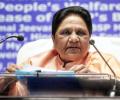
BSP chief Mayawati has criticised the Centre's decision to introduce a 0.4 per cent fee on UPI merchant transactions exceeding Rs 2,000, effective October 15. She termed it a "capitalist profiteering attitude" that burdens the common people, while the government clarified that the charge is on merchants and not customers for person-to-person transactions.

Making UPI payments fee-based for some transactions could enhance mental reservations against digital payments -- which have largely been overcome -- once more. Do we want to regress?, asks R Jagannthan.
Former Haryana Chief Minister Bhupinder Singh Hooda has criticised the newly introduced fees on UPI payments, stating they will lead to increased inflation for the common man. He dismissed government claims that customers would not be burdened, arguing that merchants would pass on the costs. Hooda demanded the immediate withdrawal of these fees, highlighting that the government's move contradicts its 'Digital India' initiative.

RBI Governor Sanjay Malhotra stated it is "premature" to discuss the implementation of Merchant Discount Rate (MDR) for digital payments, advising a "wait-and-watch" approach. He emphasised that investment in public payment infrastructure is necessary and someone must bear the cost, whether through taxes or MDR. The government is currently working on amendments to relevant statutes, and the RBI is focused on strengthening this infrastructure.

A think tank, GTRI, has urged India to resist US pressure regarding its UPI policies, advocating for competition, policy autonomy, and a sustainable payments ecosystem. This comes as the Lok Sabha passed a bill allowing charges on UPI, and the US has criticised India's digital payment systems, raising concerns about the future of India's digital payment landscape.

A think tank, GTRI, has urged India to resist US pressure regarding its UPI policies, advocating for the defence of competition, policy autonomy, and the long-term sustainability of its payments ecosystem. This comes as the Lok Sabha passed a bill allowing charges on UPI transactions, a move GTRI suggests should not be influenced by foreign trade complaints.

'If you listen to a rowdy in a class, he will keep on bullying you.' 'India can say do whatever you want. We will not compromise on anything.'
This would imply a 29 per cent year-on-year rise, significantly lower than growth rates seen in recent years.

Several executives argue that UPI has the potential to grow tenfold, but warn that the absence of a monetisation model risks stagnating the real-time payments system, which has been recording all-time-high transaction volumes every year.

'The only solution is for the government to allow us to charge a low controlled MDR of 25 bps on UPI P2M transactions only for merchants with more than a Rs 40 lakh turnover.'

As in the past, it is up to the merchants to decide if they will bear the burden of the charge or bill it to the customers. Subhomoy Bhattacharjee reports.

The Bharat Interface For Money app was launched on the iOS platform earlier this month. It is also available on the more popular Android platform. There have been over 17 million downloads of the BHIM app so far.
Sitharaman said surcharges on individuals having taxable income of Rs 2 crore to Rs 5 crore; and Rs 5 crore and more have been raised.

The Centre on Sunday said there are no plans to levy charges for making payments through Unified Payments Interface (UPI) while saying the service is a "digital public good with immense convenience". The ministry of finance said the concerns of service providers for cost recovery have to be met through other means. "UPI is a digital public good with immense convenience for the public & productivity gains for the economy.
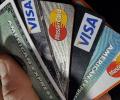
As you swipe your credit/debit card with carefree abandon at merchant outlets, banks are losing money to the tune of Rs 3,800 crore annaully, says Soumya Kanti Ghosh
The Reserve Bank of India's (RBI's) recent decision to allow credit cards for payments through the Unified Payments Interface (UPI) is likely to attract a merchant discount rate (MDR), said a top payment industry source. For smaller merchants, a subsidy for MDR could be provided. "With credit card-UPI linkage, UPI will not only be a payment instrument but also a lending platform. "How can banks lend without a commercial model? Also, the government has said MDR will be zero for payment products but not for lending products," the source said, indicating the MDR regime for credit card-linked UPI payments.
Credit card payments to buy fuel at petrol pumps will from October 1 not get a 0.75 per cent discount that State-owned oil companies had introduced more than two-and-a-half years back to promote digital payments.

Banks and oil companies are in discussions as to who should bear these charges, it said a day after averting a crisis that would have hit millions of people as oil pump owners threatened to stop taking card payments.

Monthly and seasonal suburban railway tickets purchased through digital mode will get 0.5 per cent discount from January 1

'Dear Business Partner, Kindly note and inform your all customers that Digital Cashback has been revised from 0.75 per cent to 0.25 per cent with effect from August 1, 2018 across oil industry for all loyalty customers,' said the text message sent by State-owned oil companies to petrol pump operators.

'The focus needs to shift towards the ability to collect payments, particularly in tier-3 to tier-4 areas where acceptance is still lacking.'
There will be no charge for RuPay credit card use on Unified Payments Interface (UPI) for transactions up to Rs 2,000 in line with the RBI direction, a recent NPCI circular said. RuPay credit card has been operational for the last four years, and all major banks are enabled and are issuing incremental cards for both commercial and retail segments. "During credit card on-boarding on the apps, the device binding and UPI PIN setting process shall include and be construed as customer consent for credit card enablement for all types of transactions," the circular dated October 4 said.

While brick-and-mortar retailers have been the most vocal in their protests, e-tailers do not seem to be in a hurry.

In March this year, Worldline India launched Vabox (Voice Alert Box): merchants will now get instant audio alerts on the settlement of UPI (Unified Payments Interface) payments via QR codes in languages of their choice when customers check out. "They needn't worry whether the amount has been credited to their account," says Gulshan Pruthi, the firm's executive vice-president. The French payments giant will roll out 500,000 Vaboxes in the initial phase.

The temptation to get into businesses that are hot is perhaps too great for any politician, no matter what his public slogans are. Nehru plunged into hot sectors of his time -- engineering and iron and steel. Modi has plunged into digital payments -- the hot sector of his time, notes Debashis Basu.

To promote cashless transactions, the government had waived the Merchant Discount Rate on fuel purchase post demonetisation for consumers. But after the expiry of the 50-day window, the banks have decided to levy MDR on petrol pump owners.

Ways on how consumers can maximise benefits.

At a time when the Modi government is attempting to push cashlessness with coercive means, Devangshu Datta explains why cash usage is popular even in nations with good cashless infrastructure.

Terming demonetisation as an 'unplanned and unthought process', Vadra wrote, "The government seems to have reached its levels of desperation to overcome the initial blunder it created."

Gift your brother/sister something smart, useful and trendy, says Ashish Narsale/Rediff.com.
